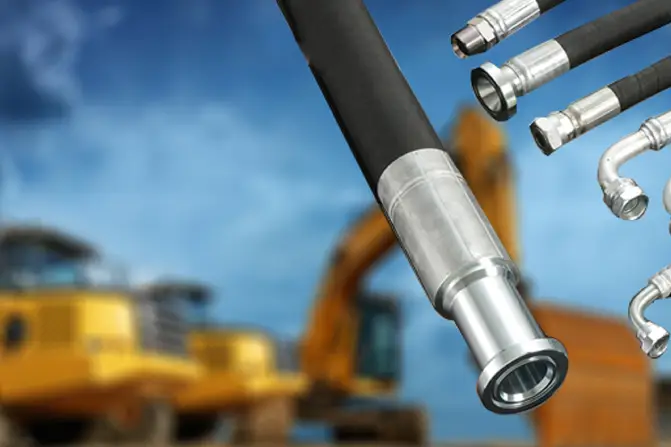
Hydraulic hose manufacturers help companies reduce operational costs by improving hose durability, lowering replacement frequency, and reducing machine downtime. A well-designed hydraulic hose system can extend service intervals by 30%–50%, while proper material selection, precision manufacturing, and customized assemblies reduce maintenance expenses across construction, agriculture, mining, and industrial equipment applications.
Hydraulic hoses are small components in large mechanical systems, but their failure can stop entire operations. In heavy equipment sectors, unexpected hydraulic failures may create several hours of downtime, additional labor costs, fluid replacement expenses, and production delays. Choosing reliable suppliers such as hydraulic hose manufacturers helps companies improve equipment availability and control long-term operating costs.
Many companies focus only on the purchase price of hydraulic hoses, but the total cost includes installation, replacement, inspection, and machine downtime. A hose that costs 20% more initially may provide a service life that is 2 times longer, reducing the number of replacements required over a 5-year equipment cycle.
“A lower replacement frequency often creates larger savings than a lower initial purchase price.”
Manufacturing quality directly affects how long a hydraulic hose can operate under pressure. Modern hydraulic hoses are produced with multiple reinforcement layers, including braided steel wire and spiral wire structures, to handle demanding conditions. A four-layer spiral hose used in mining equipment can withstand thousands of pressure cycles at working pressures above 4000 psi when properly designed.
Material selection is another area where manufacturers help reduce costs. Hydraulic systems often operate in environments with temperature changes, vibration, abrasion, and exposure to oils or chemicals. Rubber compounds with improved heat and ozone resistance can maintain flexibility for longer periods.
| Hose design factor | Cost impact |
|---|---|
| Improved rubber compound | Longer replacement intervals |
| Reinforced wire layers | Higher pressure resistance |
| Better cover materials | Reduced abrasion damage |
| Correct fitting design | Fewer leakage problems |
A hose failure caused by incorrect material selection may happen months earlier than expected. For example, equipment operating continuously at temperatures above 90°C requires hose materials designed for heat resistance. Using unsuitable products can reduce service life by 40% or more in harsh working environments.
The manufacturing process also affects reliability. Advanced production facilities use automated extrusion, controlled reinforcement placement, and pressure testing systems to maintain consistent quality. In 2024, many industrial suppliers increased the use of automated inspection equipment because production consistency directly affects failure rates in large equipment fleets.
“A consistent manufacturing process reduces variation between individual hose assemblies.”
Hydraulic hose manufacturers also reduce operational expenses through customized solutions. Standard hoses may not always match the requirements of specific machines. Incorrect hose length, unsuitable fittings, or poor routing can increase bending stress and accelerate wear.
A customized assembly considers operating pressure, movement range, temperature conditions, and installation space. In mobile equipment applications, correct routing can reduce external abrasion and extend hose lifespan by 20%–35%.
Different industries require different hose performance levels. Construction equipment, agricultural machinery, and industrial systems operate under different pressure and environmental conditions.
| Industry | Common requirement |
|---|---|
| Construction | High vibration resistance and abrasion protection |
| Mining | Extreme pressure and heavy-duty reinforcement |
| Agriculture | Weather resistance and flexible operation |
| Manufacturing | Stable performance under continuous cycles |
Mining equipment often operates for 10–20 hours per day, making hose reliability especially important. A failed hydraulic line on an excavator or loader can delay production schedules and increase repair costs. Using hoses designed for specific working conditions helps reduce unexpected maintenance events.
Maintenance planning is another way manufacturers help customers save money. Many suppliers provide technical recommendations for installation, inspection frequency, and replacement timing. Regular inspection can identify surface cracks, fitting damage, and leakage signs before complete failure occurs.
A preventive replacement program usually costs less than emergency repairs. For example, replacing a hose during scheduled maintenance may require less than 1 hour of labor, while repairing a failed hose during production may involve several hours of downtime and additional service costs.
Hydraulic efficiency also affects operating expenses. Hose size and internal structure influence fluid movement inside hydraulic systems. A hose with unsuitable internal diameter may increase pressure loss and require the hydraulic pump to work harder.
In large industrial systems operating continuously, even small efficiency improvements can reduce energy consumption. A properly selected hose assembly helps maintain stable fluid flow and reduces unnecessary system stress.
Supply chain management is another factor affecting total costs. Companies that frequently experience long delivery times often need to keep larger inventories of replacement hoses. This increases storage requirements and ties up resources.
Reliable suppliers with stable production capacity can provide shorter delivery cycles and consistent product availability. For businesses managing hundreds of machines, reducing inventory levels by 15%–25% can improve overall maintenance efficiency.
“A dependable supply partner helps companies plan maintenance instead of reacting to unexpected failures.”
Testing standards also influence product reliability. Quality hydraulic hoses are commonly tested through pressure testing, impulse testing, leakage inspection, and dimensional checks. International standards such as SAE requirements define performance levels for different hose categories.
A hose designed for a 3000 psi working pressure may be tested at much higher pressure levels to confirm safety margins. These tests increase manufacturing costs slightly but reduce the chance of expensive field failures.
Environmental protection has become another factor in hydraulic system management. Hydraulic fluid leakage creates additional costs through fluid replacement, cleaning, and environmental handling procedures. In industries such as agriculture and construction, reducing leaks helps companies maintain cleaner working conditions.
The relationship between customers and manufacturers has also changed. Many companies now expect technical support instead of only purchasing products. Suppliers analyze application conditions and recommend suitable hose structures, fittings, and maintenance schedules.
This engineering support helps companies select products based on actual operating requirements rather than simple price comparisons. Over the lifetime of equipment, a well-matched hydraulic hose solution can reduce replacement frequency, improve machine uptime, and lower maintenance spending.
Digital manufacturing technologies are improving production control as well. Some manufacturers use automated tracking systems and production data analysis to monitor quality during manufacturing. These methods improve traceability and allow faster identification of production issues.
Since hydraulic equipment is used worldwide in industries requiring continuous operation, reliable hose solutions remain important for cost management. Companies that evaluate durability, testing standards, customization ability, and supplier support can achieve better long-term performance.
Selecting the right hydraulic hose manufacturer allows businesses to reduce maintenance costs, improve equipment reliability, and achieve more predictable operating expenses over the entire service life of hydraulic systems.